We are proud to welcome leading voices from academia and industry
who will share groundbreaking insights and inspire new directions
across the conference themes.
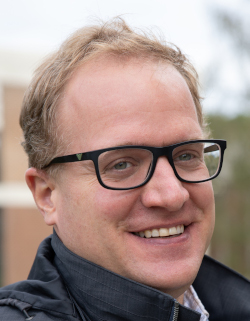
UCLouvain · Full Professor
Prof. Renaud Ronsse
Design, Control, and Validation of a Full-Leg Prosthesis
Prof. Renaud Ronsse is specialized in bionics and robotics for human movement assistance.
He leads a team developing lower-limb prostheses, such as the ELSA ankle, and recently achieved a world first by enabling a person with a hip disarticulation to walk with a full bionic leg.
His research spans the design of innovative prototypes, bio-inspired robot control, and modeling of animal locomotion.
He is also the Vice-President for Research at the Institute of Mechanics, Materials, and Civil Engineering at UCLouvain, and heads a major continuing education program for medical devices.
Session Abstract
In this talk, I will overview our recent developments in the design of a full-leg prosthesis to replace the missing joint(s) of people having suffered from lower-limb amputation.
The bionic ankle ELSA is a compact device that replicates the biomechanical function of a human ankle in daily locomotion tasks.
It embeds all technological components within the volume of the shoe, such that it has the potential to be used by people with very low-level of amputation.
Our prosthetic knee is fully passive, yet can deliver assistance during walking and sit-to-stand transfer tasks, by means of clever design of elastic and clutching mechanisms.
Finally, AURHA is a prototype aiming at replacing a biological hip after hip disarticulation.
This extreme amputation level poses unique scientific challenges in terms of mechanical design and control, that we tackled with innovative solutions.
The talk will overview the specific challenges of each leg joint, and will explain how we addressed them with a global bio-inspired approach.
Geneva University Hospital · Ph.D, FIEEE, FAIMBE, FAAPM
Prof. Habib Zaidi
Adventures in AI-powered multimodality medical imaging wonderland
Habib Zaidi is Chief physicist and head of the PET Instrumentation & Neuroimaging Laboratory at Geneva University Hospital and full Professor at the medical school of the University of Geneva.
He is also a Professor at the University of Groningen (Netherlands), the University of Southern Denmark (Denmark) and Óbuda University (Hungary).
His research is supported by the Swiss National Foundation, the European Commission, private foundations and industry (Total 11M+ US$) and centres on hybrid imaging instrumentation (PET/CT and PET/MRI), computational modelling and radiation dosimetry and deep learning.
He was guest editor for 14 special issues of peer-reviewed journals and serves as founding Editor-in-Chief (scientific) of the British Journal of Radiology (BJR)|Open, Deputy Editor for Medical Physics and is on the editorial board of leading journals in medical physics and medical imaging.
He has been elevated to the grade of fellow of the IEEE, AIMBE, AAPM, IOMP, AAIA and the BIR.
His academic accomplishments in the area of quantitative PET imaging and artificial intelligence-powered multimodality imaging have been well recognized by his peers since he is a recipient of many awards and distinctions among which the 2003 Bruce Hasegawa Young Investigator Medical Imaging Science Award given by the IEEE, the prestigious (100’000$) 2010 Kuwait Prize of Applied Sciences (known as the Middle Eastern Nobel Prize) and the 2023 John Mallard Award given by the IOMP for innovative developments of high scientific quality.
Prof. Zaidi has been an invited speaker of over 250 keynote lectures and talks at an international level, has authored over 485+ peer-reviewed articles (h-index=87, >27’400+ citations) in prominent journals and is the editor of four textbooks.
Session Abstract
Positron emission tomography (PET), x-ray computed tomography (CT) and magnetic resonance imaging (MRI) and their combinations (PET/CT and PET/MRI) provide powerful multimodality techniques for in vivo imaging.
This talk presents the fundamental principles of multimodality imaging and reviews the major applications of artificial intelligence (AI), in particular deep learning approaches, in multimodality medical image analysis.
It will inform the audience about a series of advanced development recently carried out at the PET instrumentation & Neuroimaging Lab of Geneva University Hospital and other active research groups.
To this end, the applications of deep learning in five generic fields of multimodality medical imaging, including imaging instrumentation design, image denoising (low-dose imaging), image reconstruction quantification and segmentation, radiation dosimetry and computer-aided diagnosis and outcome prediction are discussed.
Deep learning algorithms have been widely utilized in various medical image analysis problems owing to the promising results achieved in image reconstruction, segmentation, regression, denoising (low-dose scanning) and radiomics analysis.
This talk reflects the tremendous increase in interest in quantitative molecular imaging using deep learning techniques in the past decade to improve image quality and to obtain quantitatively accurate data from dedicated standalone (CT, MRI, SPECT, PET) and combined PET/CT and PET/MRI imaging systems.
The deployment of DL-powered methods when exposed to a different test dataset requires ensuring that the developed model has sufficient generalizability.
This is an important part of quality control measures prior to implementation in the clinic.
Novel deep learning techniques are revolutionizing clinical practice and are now offering unique capabilities to the clinical medical imaging community.
Future opportunities and the challenges facing the adoption of deep learning approaches and their role in molecular imaging research are also addressed.
Erciyes University · Full Professor Dept. of Biomedical Engineering
Prof. Dr. Mehmet Emin YÜKSEL
Computational Intelligence Methods for Heart Sound Signal Analysis for Efficient Diagnosis of Valvular Heart Diseases
Dr. Mehmet Emin YÜKSEL received his B.S. degree in electronics and communications engineering from Istanbul Technical University, Istanbul, Türkiye, in July-1990.
In February-1991, he joined the Dept. of Electrical and Electronics Eng., Erciyes University, Kayseri, Türkiye.
He received his M.S. and Ph.D. degrees in electronics engineering from Erciyes University in February-1993 and September-1996, respectively.
Currently, he is a full professor at the Dept. of Biomedical Engineering, Erciyes University, Kayseri, Türkiye.
His research interests include computational intelligence techniques and their applications in biomedical signal and image processing.
Dr. YÜKSEL served as the chair/co-chair of various international scientific conferences including IEEE 13th Signal Processing and Communication Applications Conference (IEEE SIU-2005),
International Conference on Multivariate Statistical Modeling and High Dimensional Data Mining (HDM-2008), International Symposium on Innovations in Intelligent Systems and Applications (INISTA-2010)
and IEEE International Conference on Smart Innovations for Medicine and Engineering (SIME-2026).
He is a member of the Editorial Board of the International Journal of Reasoning-Based Intelligent Systems (IJRIS) and a senior member of the IEEE.
Session Abstract
Cardiovascular diseases (CVDs) have been a major cause of human mortality in recent years.
Therefore, early detection of CVDs is of key importance for reducing not only mortality rates but also the economic burden imposed on healthcare systems by these diseases.
The first step in the examination of a patient for CVD diagnosis is almost always auscultation.
In this procedure, a physician uses a stethoscope to listen to and evaluate heart sounds obtained directly from the patient’s chest.
This method is very easy to perform, yet highly effective for rapid cardiac assessment.
However, the effectiveness of auscultation strongly depends on the physician’s expertise.
Therefore, the development of automatic auscultation methods has become an active and popular research area in recent years.
Naturally, the most important task in designing an automatic auscultation system is the development of methods for the accurate analysis of heart sounds for diagnosing various CVDs.
In this talk, we will investigate various methods that combine computational intelligence with signal and image processing techniques for CVD diagnosis.
We will begin by examining the mechanisms of the heart responsible for generating heart sounds.
We will then briefly review the fundamental concepts of phonocardiography.
Following this, we will examine major approaches for analyzing heart sound signals by exploiting their different characteristics in the time, frequency, and scale domains.
For this purpose, we will provide a comparative evaluation of selected representative methods from these approaches and highlight their advantages and disadvantages.
We will conclude the talk with a discussion of future directions in this research area.
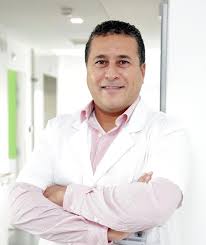
European Private Hospital in Aubervilliers, Paris· Chief of Functional Neurosurgery Unit
Naoufel Ouerchefani, MD
Integration of Remote Follow-up for Spinal Cord and Dorsal Root Ganglion Stimulation:
Clinical Outcomes, Patient Satisfaction, and System-Level Impacts from a Cohort Study
Dr. Naoufel Ouerchefani is a distinguished neurosurgeon and the Chief of the Functional Neurosurgery Unit at the European Private Hospital in Aubervilliers, Paris, and a consultant at Foch Hospital in Paris.
Specializing in functional neurosurgery and pain management, Dr. Ouerchefani earned his Medical Doctorate with honors from the University of Medicine of Créteil in 2005, following a thesis on predictive factors of hydrocephalus after spontaneous subarachnoid hemorrhage.
His clinical expertise is complemented by a significant body of research in neuromodulation and cognitive neuroscience.
He has served as an investigator on numerous national clinical research projects (PHRC), including recent studies on spinal cord stimulation for Sickle Cell Disease and peripheral vascular disease.
He is a prolific author, with numerous publications in high-impact, peer-reviewed journals such as Neuropsychologia, Journal of Neuropsychology, and Social Neuroscience, focusing on prefrontal cortex function, decision-making, and social cognition.
Session Abstract
Spinal cord stimulation (SCS) and dorsal root ganglion stimulation (DRG-S) are well established therapies for refractory chronic pain.
Ongoing device programming requires regular follow-up and traditional in-clinic visits place substantial burdens in terms of travel, time, and cost.
The COVID-19 pandemic accelerated telehealth adoption, facilitating secure remote neuromodulation programming platforms (e.g., Abbott NeuroSphere™ Virtual Clinic[RP1.1]), enabling real-time encrypted programming via video link.
Speaker Lineup Under Development
We are excited to announce that we are currently inviting world-renowned experts to join us as keynote speakers for SIME 2026.
Check back regularly for updates!
Cookie Consent
We use cookies to improve your experience on our site. By using our site, you consent to cookies.
Websites store cookies to enhance functionality and personalise your experience. You can manage your preferences, but blocking some cookies may impact site performance and services.
Essential cookies enable basic functions and are necessary for the proper function of the website.
Name
Description
Duration
Cookie Preferences
This cookie is used to store the user's cookie consent preferences.
30 days
These cookies are needed for adding comments on this website.
Name
Description
Duration
comment_author
Used to track the user across multiple sessions.
Session
comment_author_email
Used to track the user across multiple sessions.
Session
comment_author_url
Used to track the user across multiple sessions.
Session
Statistics cookies collect information anonymously. This information helps us understand how visitors use our website.
Google Analytics is a powerful tool that tracks and analyzes website traffic for informed marketing decisions.
Contains information related to marketing campaigns of the user. These are shared with Google AdWords / Google Ads when the Google Ads and Google Analytics accounts are linked together.
90 days
__utma
ID used to identify users and sessions
2 years after last activity
__utmt
Used to monitor number of Google Analytics server requests
10 minutes
__utmb
Used to distinguish new sessions and visits. This cookie is set when the GA.js javascript library is loaded and there is no existing __utmb cookie. The cookie is updated every time data is sent to the Google Analytics server.
30 minutes after last activity
__utmc
Used only with old Urchin versions of Google Analytics and not with GA.js. Was used to distinguish between new sessions and visits at the end of a session.
End of session (browser)
__utmz
Contains information about the traffic source or campaign that directed user to the website. The cookie is set when the GA.js javascript is loaded and updated when data is sent to the Google Anaytics server
6 months after last activity
__utmv
Contains custom information set by the web developer via the _setCustomVar method in Google Analytics. This cookie is updated every time new data is sent to the Google Analytics server.
2 years after last activity
__utmx
Used to determine whether a user is included in an A / B or Multivariate test.
18 months
_ga
ID used to identify users
2 years
_gali
Used by Google Analytics to determine which links on a page are being clicked
30 seconds
_ga_
ID used to identify users
2 years
_gid
ID used to identify users for 24 hours after last activity
24 hours
_gat
Used to monitor number of Google Analytics server requests when using Google Tag Manager